.png)
The Folklore of Sussex: A Guide to the Creatures, Spirits, and Legends of the County
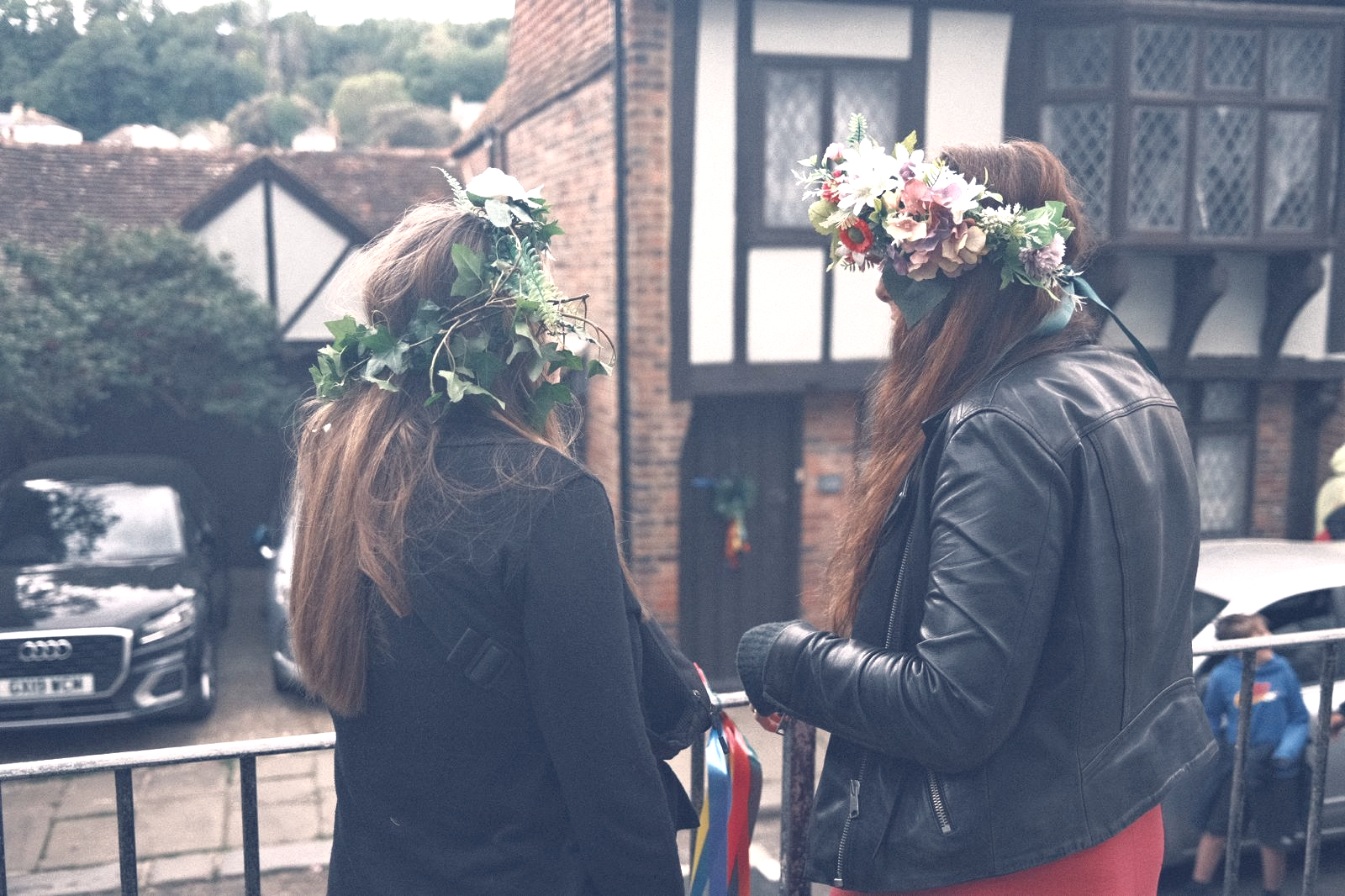
Every May bank holiday, the Old Town of Hastings fills with drums, green-painted faces, and an enormous tower of living greenery moving through the streets. The Jack in the Green festival draws Morris dancers from across the country and visitors from further still, and for three days each May, it makes the ancient feel immediate and the immediate feel ancient.

This is, in its way, a fitting introduction to Sussex folklore. The county has always been a place where the old things refuse to stay buried – where the landscape carries its legends visibly, where the names of fields and hills and underwater holes record creatures that most counties have long since forgotten.
Sussex has Pharisees dancing in its meadows, a water-dragon in the springs at Lyminster, a giant’s sword in Arundel, a mermaid off the coast at Selsey, and a Devil who left his mark on the Downs above Brighton. The Jack in the Green, alive and evolving and entirely itself, is perhaps the best emblem of all of it: a tradition that carries the past into the present without pretending they are the same thing.
What follows is a guide to the folklore that Sussex Roots explores – the creatures, spirits, and legends of a county that has never quite agreed to be entirely ordinary.
Jack in the Green, Hastings

The festival that links the stories in Sussex Roots is also one of the county’s most distinctive living traditions. The Jack in the Green has roots in eighteenth-century chimney sweep celebrations and was revived in Hastings in 1983 as a Morris dancing convention, growing over four decades into something considerably larger and less categorisable.
It is a folk festival, yes. It is also a demonstration of how folklore works: through participation, reinvention, and the willingness of communities to carry something forward without needing to explain exactly why. For a deeper look at the history and what it means, see our full post. Read more about Jack in the Green here.
The inland county: Downs, woods, and old fields
The Pharisees (Brighton and the Sussex Downs)
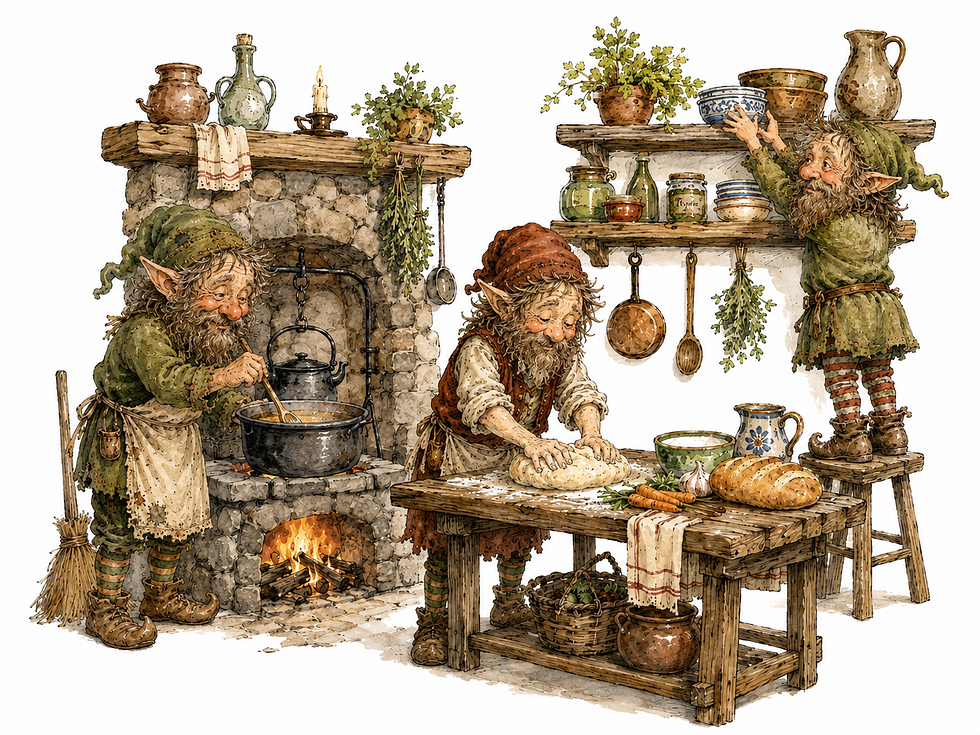
Sussex’s name for the fairy folk – the Pharisees – is a linguistic accident, the word “fairies” having passed through the Sussex dialect until it emerged as something altogether different.
They dance in rings across the Downs, occupy the liminal spaces between fields and woodland, and must be treated with the careful non-acknowledgement that the fairy tradition has always required. A harvest song captured it: “We’ll drink and dance like the Pharisees.” For the full history of Sussex’s Pharisees and the wider British fairy tradition, see our post. Read more about fairies here.
The Devil (Brighton and the Devil’s Dyke)

The Devil’s Dyke, the dramatic dry valley cutting through the South Downs north of Brighton, exists because the Devil attempted to flood the Sussex Weald overnight and was foiled by an old woman’s candle and a rooster who crowed too early. He also visited Mayfield, where Saint Dunstan seized him by the nose with red-hot tongs and sent him fleeing to Tunbridge Wells. Sussex’s Devil is a trickster and a builder who always, in the end, loses. Full post here. Read more about the Devil in folklore here.
Witches and cunning folk (Alfriston)
Sussex’s witch tradition is richer and more complicated than simple tales of malevolence. Alongside the feared witch of popular imagination – the one who curses livestock, spoils milk, and must be dealt with by a cunning man or woman – the county had a robust tradition of cunning folk: practitioners who used charms, knowledge, and ritual to diagnose bewitchment, identify thieves, and provide remedies for ailments that the parish doctor could not or would not address. The line between witch and cunning folk was not always clear, and the communities that feared one often quietly relied upon the other.
Alfriston, the ancient village on the Cuckmere river, carried its share of witch lore, as did the wider Wealden villages with their isolated farms, their old field names, and their long memories. Cunning folk operated on the edges of communities, known but not quite acknowledged, needed but not quite trusted. They are among the more nuanced figures in Sussex folklore – and in Sussex Roots. For the full story of the witch and cunning folk tradition across the British Isles, including Ursula Welfare of Alfriston, see our post. Read more about witches and cunning folk here.
Sir Bevis of Hampton and the sword Morglay (Arundel)

Arundel’s connection to the medieval romance of Bevis of Hampton runs through the landscape itself: Bevis’s horse is named Arundel, there is a Bevis’s Tower at Arundel Castle, and the giant Ascapart – defeated by Bevis and subsequently, in the peculiar logic of medieval romance, domesticated into his page – is commemorated alongside his conqueror at the Bargate in Southampton.
The sword Morglay is among the great named weapons of English romance. For the full story of Sir Bevis and the wider British giant tradition, see our post. Read more about the ancient giants of Albion here.
The boggart

The boggart is most commonly associated with the north of England, but the household poltergeist tradition – a domestic spirit, once neutral or benign, that has been offended and turned destructive – appears in Sussex as it does across the British Isles.
The Sussex boggart in Sussex Roots is what boggarts generally are: the consequence of getting the arrangement with a household spirit badly wrong, and considerably harder to deal with than whatever was there before. For more on household spirits and their discontented counterparts, see our post. Read more about household spirits here.
The dryad and the wishing oak
Sussex’s ancient woodland – the remnants of the great Andredsweald that once covered the Weald from Kent to Hampshire – is old enough to carry its own presences. The dryad tradition, the idea of tree spirits inhabiting specific trees with individual character and intelligence, arrived with the classical world and settled comfortably into the older folk imagination of the woodland.
In Sussex Roots, a specific oak grants wishes – an ancient tree in the Sussex woodland, old enough to have witnessed centuries of the county’s history, and inhabited by something that has been paying attention. The oak is the most sacred tree in the English folk tradition: planted by acorn, grown over centuries, and accorded in numerous cultures the kind of respect usually reserved for beings with opinions. The wishing oak in the book has opinions. It also has conditions.
The coastal county: springs, sea, and deep water

The Knucker (Lyminster)
At Lyminster in West Sussex, a natural spring called the Knuckerhole – cold, still, and reputedly bottomless – was once home to a Knucker: a limbless water-dragon, from the Saxon nicor, that emerged at night to terrorise the surrounding villages. The Lyminster Knucker was defeated not by a knight but by a local man with poisoned pies, which is the kind of practical solution that Sussex folklore favours. The Knuckerhole is still there. The water never freezes and never fully drains. For the full story of Sussex’s water-dragon and the wider British dragon tradition, see our post. Read more about dragons here.
The mermaid (Mixon Hole and Selsey Bill)
Off the coast at Selsey Bill, where the chalk meets the sea and the water deepens into the Mixon Hole, there is a mermaid tradition that belongs specifically to this stretch of the Sussex coast. Mixon Hole – a deep underwater depression in the seabed off Selsey – is the kind of geographical feature that acquires supernatural associations naturally: dark, deep, and located at the end of a headland that the sea has been quietly claiming for centuries.
The Sussex mermaid tradition shares the broader character of British coastal folklore: the mermaid is neither wholly benign nor simply malevolent, but a figure of the boundary between worlds, encountered at the place where the land runs out. She knows things. The question is always what those things cost. In Sussex Roots, she is the coast’s own presence, as embedded in her landscape as the Knucker is in the springs of the Weald. For the full story of the Mixon Hole mermaid, the stolen church bell, and the wider British mermaid tradition, see our post. Read more about mermaids in folklore here.
A county that remembers

What these creatures and legends share is not a single origin or a common mythology but a common quality: they belong to specific places. The Knucker is not just any water-dragon but the Knucker of Lyminster. The mermaid is not just any coastal presence, but the presence at Mixon Hole. The Devil’s ambition failed not somewhere in England but above Brighton, on a specific night, with a specific rooster. Sussex folklore is embedded in the Sussex landscape, and that embeddedness is precisely what gives it its weight.
The Jack in the Green at Hastings understands this. The festival is not a generic May Day celebration but a Hastings celebration – rooted in the Old Town, shaped by the people who live there, carrying forward something that is genuinely theirs. It is the right frame for Sussex Roots: a collection of stories that takes the county’s folklore seriously, follows it into the specific places where it lives, and finds that the old things are still there, waiting to be paid attention to.
About the Untruth Seekers

Nobody knows quite how the Untruth Seekers came to accumulate quite so many confidential files. What is known is that they have spent considerable time in the archives, the churchyards, and the slightly odd corners of Sussex, documenting the legends, hauntings, and historical curiosities that the official record tends to overlook. Their discoveries are published under the series From the Confidential Files of the Untruth Seekers, for those willing to keep an open mind.


Comments