.png)
If You Liked The Treasure of the Cinque Ports, Try These: A Reading List for Historical Adventure Fans

The Treasure of the Cinque Ports is set in 1746, at the height of the Hawkhurst Gang’s power, in the port town of Rye and across the smuggling routes of Kent and Sussex. It is historical fiction rooted in real events and real places: the Mermaid Inn, the Cinque Ports confederation, the customs war between the Gang and the Crown. Sarah Woodward and Felix Fenwick’s search for a cursed treasure map gives the history somewhere to go.
The books below share the territory: smuggling, Georgian England, outlaws and the law, and the particular atmosphere of the British coast in a period when the most profitable trade was the illegal kind. They approach it differently – some as literary fiction, some as adventure, some as history. All of them take the period seriously.
If you want to stay in the same landscape

Winchelsea by Alex Preston
Literary historical fiction | Kent and Sussex coast, 18th century
Set along the same stretch of coastline as The Treasure of the Cinque Ports, Winchelsea is a literary novel about smuggling, loyalty, and the cost of living outside the law in Georgian England. Preston’s prose is elegant and atmospheric, and his research into the smuggling networks of Kent and Sussex is evident throughout. The novel is more literary and less plot-driven than Treasure of the Cinque Ports, but readers who want to stay in the same landscape and period will find it richly rewarding. The Cinque Ports towns feel exactly as they should: beautiful, complicated, and slightly dangerous.
If you want classic smuggling fiction

Moonfleet by J. Meade Falkner
Classic adventure fiction | Dorset coast, 17th century
First published in 1898 and never out of print, Moonfleet is the foundational English smuggling novel: a young orphan, a hidden contraband cache in a Dorset churchyard, and a network of free traders operating along the coast. Falkner’s prose has aged gracefully, and the atmosphere – the marshes, the hidden passages, the loyalty and betrayal among the smuggling community – remains entirely convincing. It is adventure fiction in the classic mould: plot-driven, morally clear, and genuinely gripping. The Dorset setting rather than Sussex, and a century earlier than The Treasure of the Cinque Ports, but the spirit is very close.

Jamaica Inn by Daphne du Maurier
Gothic historical fiction | Cornwall, early 19th century
Du Maurier’s 1936 novel, Jamaica Inn, is the most celebrated piece of British smuggling fiction ever written, and it earns the reputation. A young woman arrives at her aunt’s isolated inn on Bodmin Moor and discovers it is the headquarters of a wrecking and smuggling gang. The atmosphere is Gothic, the menace is real, and du Maurier’s command of landscape and dread is as sharp here as in Rebecca. While The Treasure of the Cinque Ports is rooted in specific historical events, Jamaica Inn is more concerned with psychological pressure and isolation. Different in tone but essential reading for anyone drawn to the period and its criminal underworld.

Lorna Doone by R.D. Blackmore
Classic adventure fiction | Exmoor, 17th century
Set on Exmoor in the 1670s among the outlaw Doone clan, Blackmore’s 1869 novel, Lorna Doone, is one of the great English adventure stories: outlaws, loyalty, landscape, and a romance conducted against a backdrop of genuine historical events, including Monmouth’s Rebellion. It is a longer and more leisurely book than Treasure of the Cinque Ports, and the landscape is Somerset rather than Sussex, but readers who enjoy the combination of historical specificity and adventurous plot will find it rewarding. Blackmore’s sense of place is exceptional.
If you want historical adventure across a wider canvas

Rogue Herries by Hugh Walpole
Historical literary fiction | Cumbria, 18th century
The first volume of Walpole’s Herries Chronicle, published in 1930, Rogue Herries follows the volatile Francis Herries as he transplants himself and his family from polite society to the wilds of Cumberland in the early eighteenth century. It is a novel of landscape, character, and the friction between civilised expectation and something older and less manageable – the same period as Treasure of the Cinque Ports, but set in the north, and more interested in psychological and social conflict than in plot-driven adventure. Walpole’s period detail is meticulous. For readers who want the Georgian era rendered at full literary length.
If you want the history behind the fiction
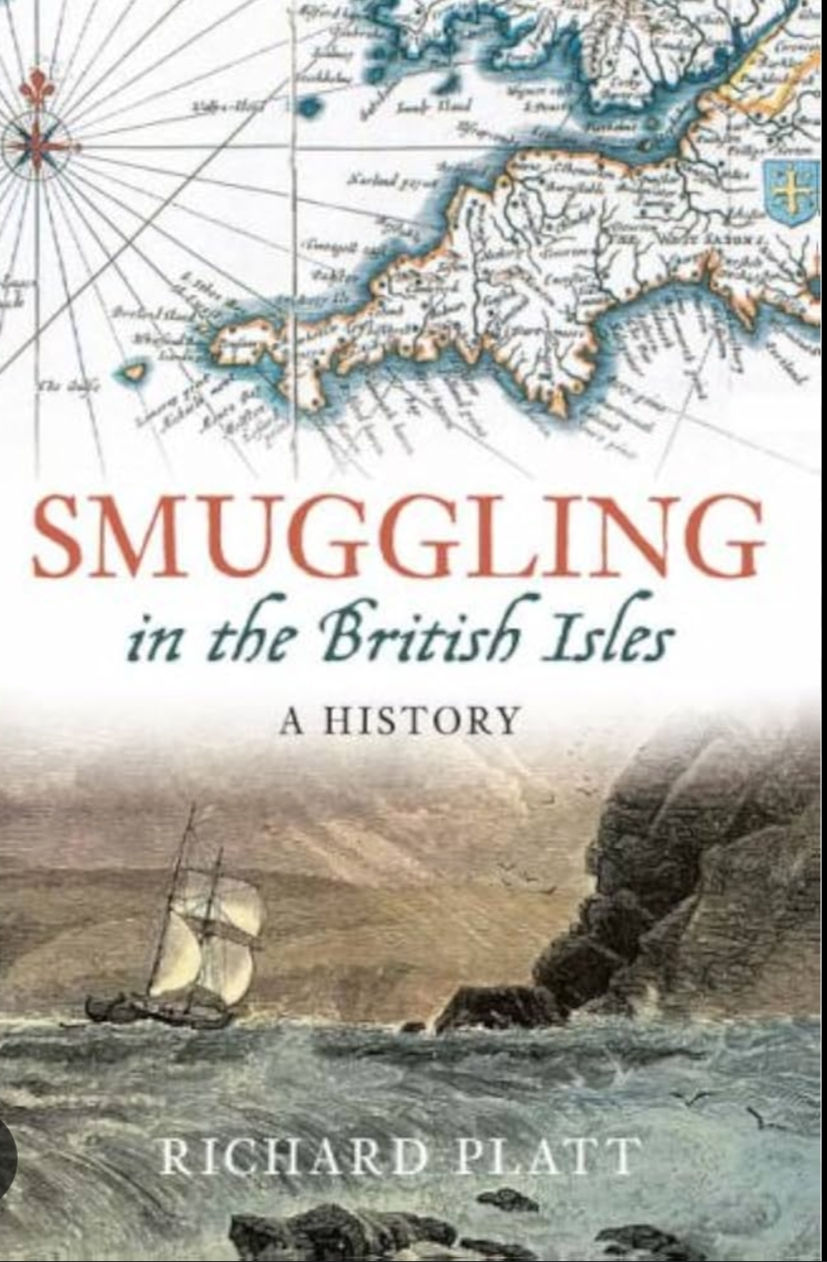
Smuggling in the British Isles by Richard Platt
Non-fiction | History of British smuggling
The historical companion to Treasure of the Cinque Ports. Platt’s book, Smuggling inthe British Isles, covers the full history of British smuggling from its medieval origins to its nineteenth-century decline: the economics of the trade, the organisation of the gangs, the geography of the routes, and the customs war that the government eventually, slowly, won. The Hawkhurst Gang features prominently, as does the Kent and Sussex coast. For readers who finished Treasure of the Cinque Ports wanting to know what was real and what was invented, and how the actual history worked, this is the book to read next. Platt writes accessibly without sacrificing accuracy.

Hawkhurst by Joseph Dragovich
Narrative non-fiction | Kent and Sussex, 1740s
The Treasure of the Cinque Ports is set at the height of the Hawkhurst Gang’s power. This is the history of that power – how it was built, how it was used, and how it was eventually dismantled. In Hawkhurst, Dragovich covers the full cast of the era: gangsters, corrupt politicians, crooked law enforcement and the vigilantes who finally broke the Gang’s hold on the county.
The ultimate engine of the whole operation was tea. By the 1730s it had become an everyday staple, but the tax on it stayed fixed while prices fell – meaning the same duty that had once represented a small fraction of the sale price now accounted for as much as half the cost to the consumer. The economics made smuggling almost inevitable; the Hawkhurst Gang simply pursued them with exceptional violence.
Dragovich writes accessibly without sacrificing accuracy, and the Sussex and Kent geography will be immediately recognisable to readers of The Treasure of the Cinque Ports. For anyone who finished the novel wanting to know where the fiction ends and the history begins, this is the obvious next read.

And of course, The Treasure of the Cinque Ports
The books above range from literary novels to adventure classics to narrative history. What they share with Treasure of the Cinque Ports is a commitment to a specific period and place, and an interest in the people who operated outside the law in ways that the communities around them often found entirely reasonable.
The Untruth Seekers’ particular contribution is the treasure map, the curses, and the ghost at the Mermaid Inn – the folklore woven through the history that makes the period feel genuinely strange as well as vivid.
About the Untruth Seekers
The Untruth Seekers are dedicated investigators of the legends, ghost stories, and historical mysteries lurking beneath the surface of Sussex and beyond – including the smuggling routes of Kent and the rather uncomfortable history of the Mermaid Inn in Rye.
Their confidential files document the folklore, hauntings, and half-buried histories that most people walk past without a second glance. All findings are published under the series From the Confidential Files of the Untruth Seekers, for readers who suspect there is always more to the story.


Comments